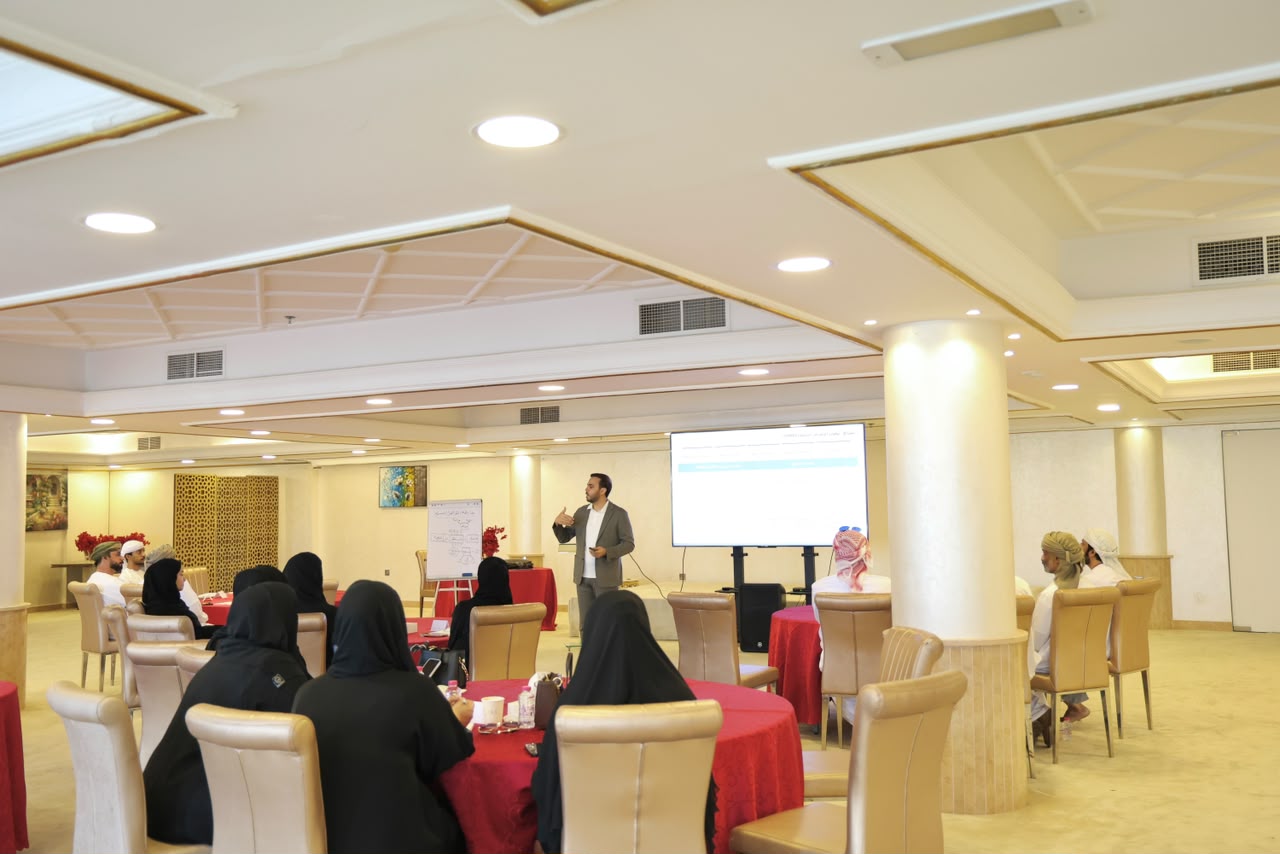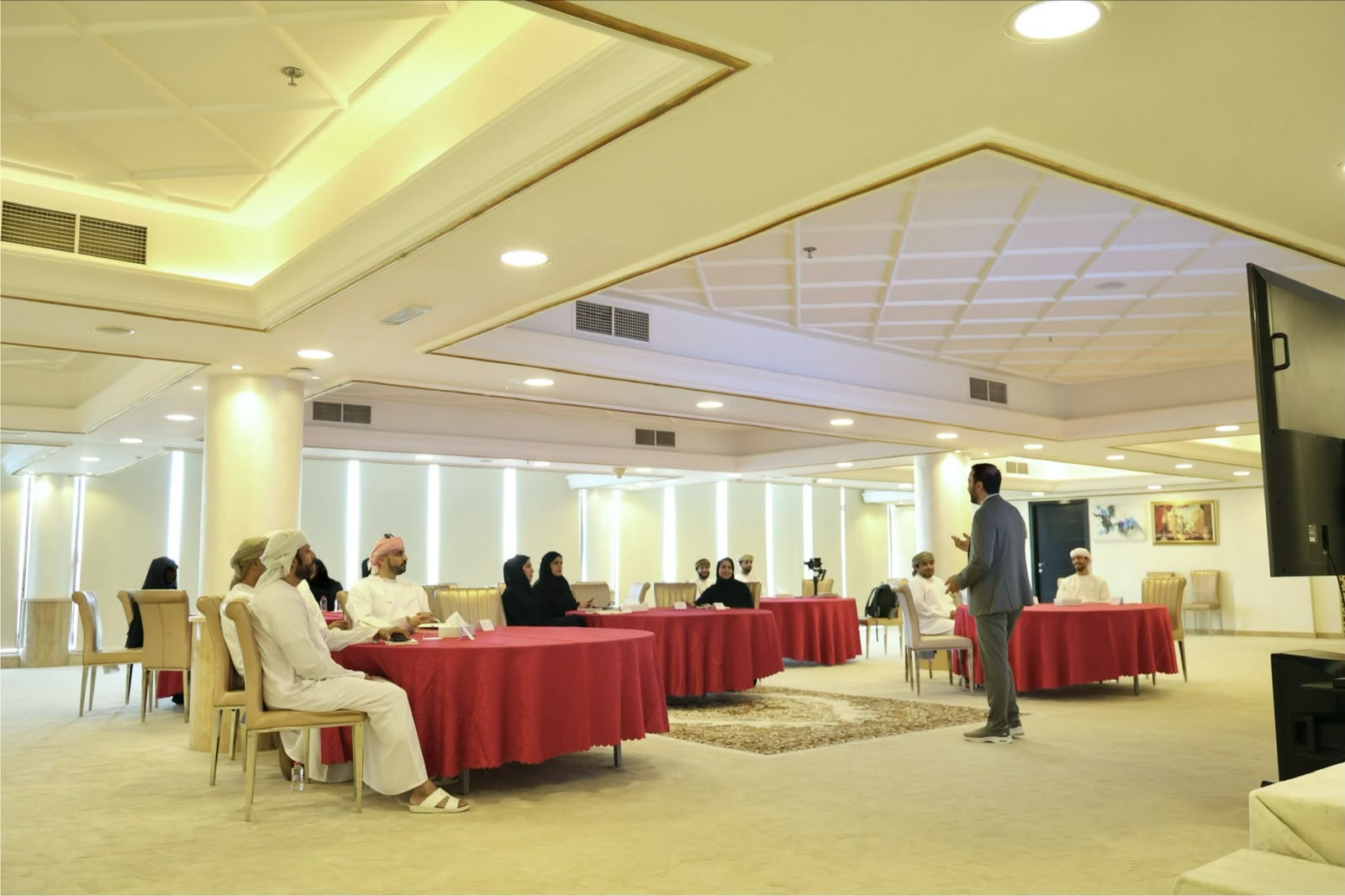
As part of efforts to enhance the efficiency of government communication and develop media practices, a training program titled “Modern Strategies in Institutional Communication” has commenced in Al Buraimi Governorate. Organized by the Ministry of Information in cooperation with the Office of the Governor of Al Buraimi, the five-day program is being held at Al Salam Grand Resort in the Wilayat of Al Buraimi. It is delivered by academic Dr. Ali Abbas, with the participation of a number of employees from government institutions across the governorate.The program aims to strengthen participants’ capabilities in preparing communication plans and developing media messages aligned with institutional objectives and priorities. It also focuses on understanding audience needs and selecting appropriate communication channels, contributing to the clear delivery of information and strengthening mutual trust between institutions and the community.The program is structured across five days. The first day addresses institutional communication as a leadership function, while the second focuses on developing advanced communication strategies. The third day explores communication in the digital age and artificial intelligence, while the fourth discusses strategic implementation, governance, and performance measurement. The program concludes with sessions on communication leadership and strategic simulation.The program integrates the leadership, strategic, and technological dimensions of institutional communication, extending through implementation, governance, and performance measurement. It also employs strategic simulation to strengthen participants’ ability to apply acquired knowledge and skills in scenarios reflecting real workplace situations.Dr. Ali Abbas, the program facilitator, said: “There is no doubt that Oman possesses a rich civilizational and human legacy that makes the development of institutional communication far more than a purely technical matter. It is an extension of the values of dialogue, balance, and respect for people that have distinguished the Omani experience and identity.”He added: “The challenge today is not merely to possess more advanced communication tools, but to empower national competencies to transform these values into a living institutional culture—one that listens as effectively as it communicates. In doing so, institutions build trust rather than merely transmit information.”He concluded: “I believe that institutions do not shape their image through how they perceive or describe themselves, but through what people experience in their relationship and interactions with them. This lies at the heart of meaningful integration between institutions and people in serving their nation.”